Why is This Trail Section Permanently Closed?
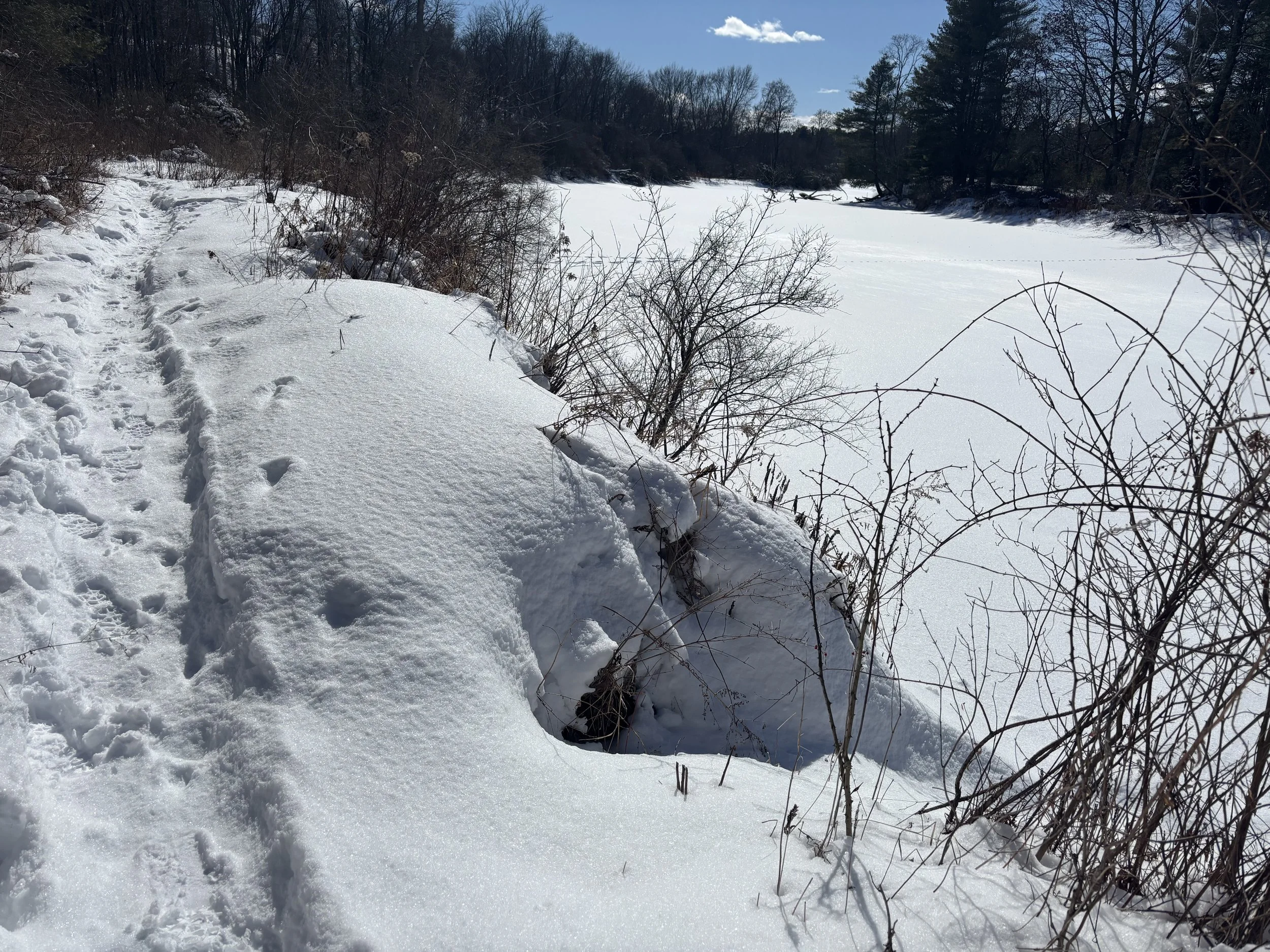
Erosion on the riverbank
Protecting Wright Park’s Riverbank: Our Commitment to Conservation and Sustainability
As a Land Trust, our mission is to connect our community with the lands we protect through conservation, recreation, and education. It is our duty to protect and conserve these lands. Recently, we have identified a riparian area on the river trail at wright park that is highly subjected to erosion. We have decided to create a reroute to mitigate damage to the fragile riverbank ecosystem and maintain the best practices of industry standards of sustainability. To protect this ecosystem and prevent further long term damage, this portion of the river trail is permanently closed.
Why is this necessary?
Riparian zones are both highly fragile and incredibly important ecosystems. Because they are so sensitive to disturbance, even regular foot traffic can cause lasting damage to soil stability, vegetation, and wildlife habitat. Closing this portion of the trail is necessary to prevent further degradation of the riverbank and to allow the area to recover and function as a healthy, resilient ecosystem.
The benefits of closing this trail:
Erosion Prevention: Stable riverbanks hold soil in place, reducing erosion and preventing excess sediment from entering and polluting the river.
Habitat Creation: Restored banks create essential habitat for fish, birds, and a wide range of wildlife species.
Improved Water Quality: Healthy riverbanks function as natural filtration systems, capturing pollutants and runoff before they reach the waterway.
Flood Mitigation: Well vegetated and reinforced banks help absorb and slow floodwaters, reducing the severity of flooding impacts.
As responsible stewards of the land, we are committed to designing and managing our trail system in accordance with recognized industry standards for sustainable trail building in Vermont. This means prioritizing thoughtful route selection, proper drainage and erosion control, climate resilience, and long term maintenance planning. When a trail segment no longer meets these standards, it is our responsibility to take corrective action. That is why we are permanently closing this section of trail. By doing so, we are reducing further environmental damage, allowing the riverbank to recover, and ensuring that our trail system reflects best practices in sustainability. Aligning our management decisions with established professional standards demonstrates our commitment to balancing recreation with conservation while protecting these lands.